Why Ramsey County's Older Suburbs Keep Surprising Buyers With The Same Two Findings
August 13, 2026
August 13, 2026
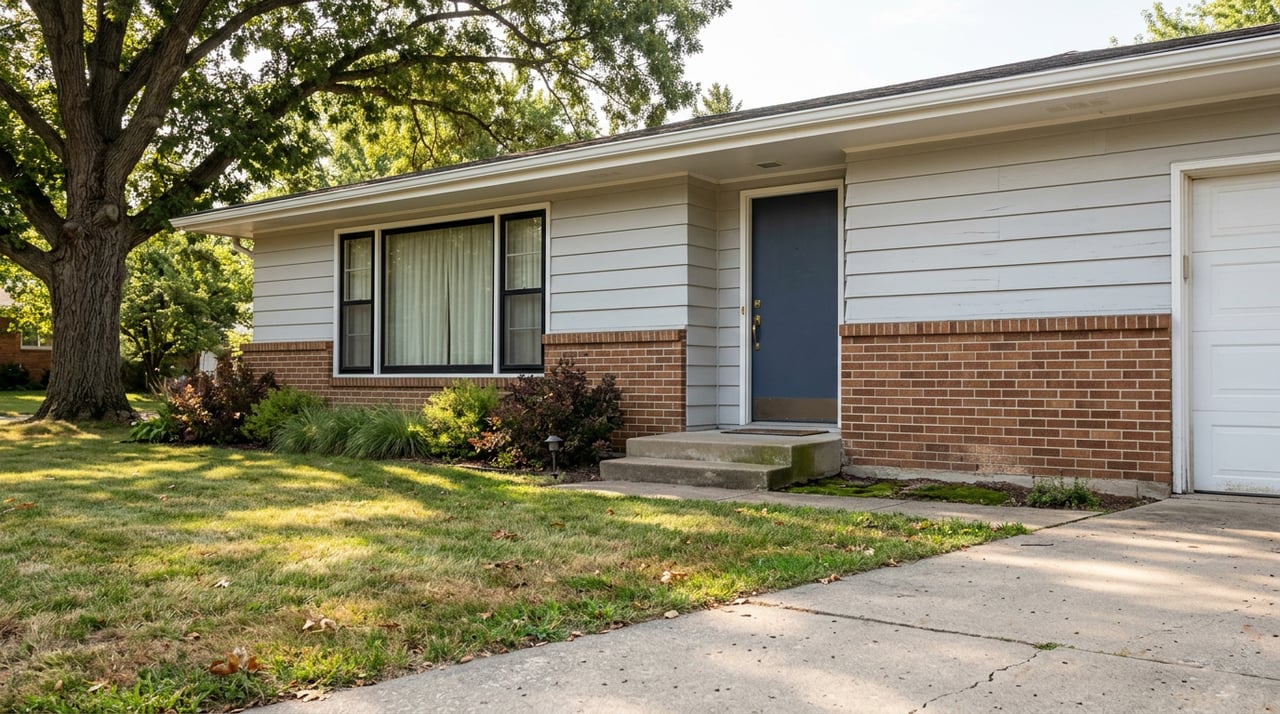
A 1968 rambler near Lake Owasso came back from its radon test at 5.7 pCi/L, well above the EPA's action level of 4.0. The culprit wasn't a cracked foundation or a failing furnace. It was an unsealed sump pit, a small gap most buyers never think to ask about. Once a contractor sealed it and installed a mitigation system, the retest came back at 1.4.
That story isn't unusual for Roseville, Maplewood, Shoreview, or any of the other Ramsey County suburbs built out in the postwar boom. It's closer to the norm. And once you understand why, you stop treating radon and sewer line trouble as two random risks to check off a list. They come from the same place.
Ramsey County sits in what the EPA classifies as Radon Zone 1, the highest risk tier in the country. That designation traces back to the glacial till underneath the region, soil that both concentrates radon gas and moves with the seasons. The same glacial till that pushes radon up through basement floors also expands when wet and contracts when it freezes, which puts steady pressure on the pipes buried in it.
Roseville's housing stock is heavily weighted toward 1955 to 1975 ramblers and split-levels, the exact era when clay tile and cast iron sewer lines were standard practice, not a red flag. That same building era runs across the ring of suburbs radon and sewer professionals treat as one coverage area: Falcon Heights, Lauderdale, Little Canada, Shoreview, Arden Hills, North Oaks, Vadnais Heights, New Brighton, and Mounds View, alongside Maplewood. Maplewood itself is a first-ring suburb of Saint Paul known for its unusually narrow shape, about a mile wide and seven and a half miles long along the city's eastern edge, and it's also home to the global headquarters and main campus of 3M. It's a well-established, desirable place to live. It's also a place where a mature maple's roots have had sixty years to work into a clay pipe joint.
So the pattern is straightforward once you see it: the building boom that gave these suburbs their character used materials and sat on soil that, decades later, produce two specific and predictable inspection findings. Roseville basements built on this glacial till routinely test between 4.0 and 8.0 pCi/L, double the action level or more. The same era of home construction is exactly the range the Maplewood public works department flags for tree root intrusion at old clay pipe joints.
Here's where the information gap catches people off guard. The Minnesota Radon Awareness Act, Minn. Stat. 144.496, took effect January 1, 2014. It requires a seller to disclose any radon test results they already have, in writing, before a purchase agreement is signed. It does not require the seller to test in the first place.
The broader Minnesota disclosure law, sections 513.52 through 513.60, works the same way. Sellers must disclose material facts they're aware of, including things like a wet basement or a bad well. But a seller who has never scoped their sewer line or run a radon monitor has nothing to disclose, because they don't know anything. On paper, that looks identical to a clean report. In practice, it means the disclosure form tells you what the seller happened to learn, not what's actually true about the house.
That distinction matters more in this housing stock than almost anywhere else in the metro. Roughly two out of every five Minnesota homes test above the 4.0 pCi/L action level, and sewer scopes are routinely recommended for any home built before 1980. If you're buying in a Ramsey County suburb built in that window, silence on the disclosure form isn't evidence the house is fine. It's usually evidence nobody checked.
Most buyers know to ask about the roof and the furnace. Far fewer ask who is responsible for the sewer line running from the house to the street, and the answer in Maplewood, like most Twin Cities suburbs, is the homeowner. The city's public works department will check the sewer main through a manhole if you call in a backup, but if the blockage sits between your house and that main, it's yours to fix.
Tree root invasion at the joints of old-style clay pipe is the most common failure mode, and it shows up specifically where mature trees exist, which describes most of the county's established neighborhoods with sixty and seventy year old canopy. A sewer scope inspection is the only way to actually see this before it becomes an emergency. It's a camera run down the line, and it either shows clean pipe or it shows exactly where the problem sits, whether that's root intrusion, an offset joint, or in some older cases a home that was never actually connected to the city main and is quietly running on an old septic system nobody remembers.
Radon mitigation costs are the more predictable side of this. A single suction point system, sub-slab depressurization with a fan and a vent pipe to the roofline, typically runs $800 to $1,800 for a straightforward home. Split-level layouts or homes with additions and multiple slab pours, which describes a lot of the county's 1960s and 70s housing stock, often need multiple suction points and land closer to $1,500 to $2,500.
Sewer repair costs vary more depending on what the scope finds. A root intrusion problem can sometimes be handled with cleaning and a trenchless liner that seals the pipe without digging up the yard. A collapsed or badly offset section usually means excavation. The number that matters here isn't a specific dollar figure, since it depends entirely on what the camera actually shows. It's the timing. A sewer scope takes an afternoon. A radon test needs 48 hours under closed-house conditions to produce a real reading. Both fit comfortably inside a standard Minnesota inspection contingency window, but only if you order them at the same time as the general inspection instead of waiting to see if anything looks off first.
The buyers who handle this well treat radon and sewer scope as part of the same first pass, not a follow-up decision made after the general inspector's report comes back. A short-term radon test typically takes two to seven days to produce results, comfortably inside a standard 30 to 45 day closing timeline, but only if it starts early. Waiting until the last week before closing to schedule a test that runs 48 hours under closed-house conditions is how buyers end up asking for extensions or making decisions with partial information.
If a result comes back above 4.0 pCi/L or a scope turns up root intrusion, Minnesota buyers and sellers are free to negotiate who pays for it and how, whether that's a price adjustment, a closing credit, or the seller handling the mitigation before closing. None of that is set by statute. It's a conversation, and it goes a lot smoother when it happens with three weeks left on the calendar instead of three days.
None of this is a reason to avoid Roseville, Maplewood, or the rest of Ramsey County's inner-ring suburbs. The county's 2026 Assessor's Report, reflecting market activity through 2025, found the most significant suburban value increases in North Oaks, Falcon Heights, and White Bear Lake, alongside Saint Paul's Summit Hill and St. Anthony Park neighborhoods. Ramsey County property is now valued at $78.12 billion, the highest total in county history, and the county has also committed more than $320 million toward downtown Saint Paul investment and property tax relief through its Building Stronger Together initiative.
Radon and aging sewer lines are a known, fixable cost of buying into homes built during a specific and well-documented era, on a specific and well-documented soil type. They're not a sign something is wrong with the neighborhood. They're the price of admission to a housing stock that's held its value for sixty years and, according to the county's own numbers, is still climbing.
Do I have to test my home for radon before selling it in Ramsey County? No. Minnesota law requires you to disclose any radon test results you already have, but it doesn't require you to test in the first place.
Who pays for sewer line repairs between the house and the street? In Maplewood, and in most of the county's older suburbs, that line is the homeowner's responsibility, not the city's, once it leaves the public main.
How long does a real estate radon test actually take? A short-term test with a continuous monitor typically runs 48 hours under closed-house conditions, and results generally come back within two to seven days, which fits inside a standard inspection contingency window if you schedule it early.
If you're weighing an older home in Roseville, Maplewood, or anywhere else in Ramsey County and want to understand what a specific property's age and construction era actually mean for your inspection contingency, Michael Favre can walk through it with you before you write an offer. Let's Find Home.
Stay up to date on the latest real estate trends.
Experience a real estate partnership built on trust, expertise, and genuine care. We bring a lifelong understanding of what “home” truly means to every client and every decision.