The Insurance Call That Can Stall a Closing in Summit Hill and Cathedral Hill
September 17, 2026
September 17, 2026
In Saint Paul's oldest neighborhoods, the person who actually decides whether your closing happens on schedule is not your lender and not your home inspector. It's an insurance underwriter you'll probably never speak with directly, and the reason has nothing to do with the foundation or the roof. It has to do with wiring most buyers can't see and most sellers stopped thinking about years ago.
Summit Hill, Cathedral Hill, Macalester-Groveland, Highland Park, and Como Park hold some of the city's most desired housing stock, much of it built before 1950, with the kind of woodwork, glass, and plaster detail that simply isn't reproduced today. That same age is exactly what puts a growing share of these houses on an insurer's declined list before a buyer ever gets to the walk-through.
Most buyers treat wiring the way they treat a cracked driveway: something to note in the inspection report and negotiate over. That's the wrong mental model for knob-and-tube. The real gate isn't whether a buyer is willing to live with old wiring. It's whether a standard insurance carrier will write a policy at all.
Most homeowners insurers decline coverage outright for homes with active knob-and-tube wiring, and the ones that will write a policy typically charge significantly more for it. In Minnesota, several major and regional carriers, along with local mutual insurers, tend to treat active knob-and-tube as an eligibility question rather than a pricing question. They don't just raise the premium. They decline the file. According to BH Electric, Minnesota carriers often bind coverage with a rider requiring wiring replacement within 30 to 60 days.
For a buyer who waived an inspection contingency to win a bidding situation in Cathedral Hill, the wiring problem doesn't surface in the disclosure packet. It surfaces in the insurance quote, often days before closing.
This isn't a general old-house problem spread evenly across the metro. It concentrates hard in a handful of Saint Paul neighborhoods because of when they were built and how little some of them have changed since.
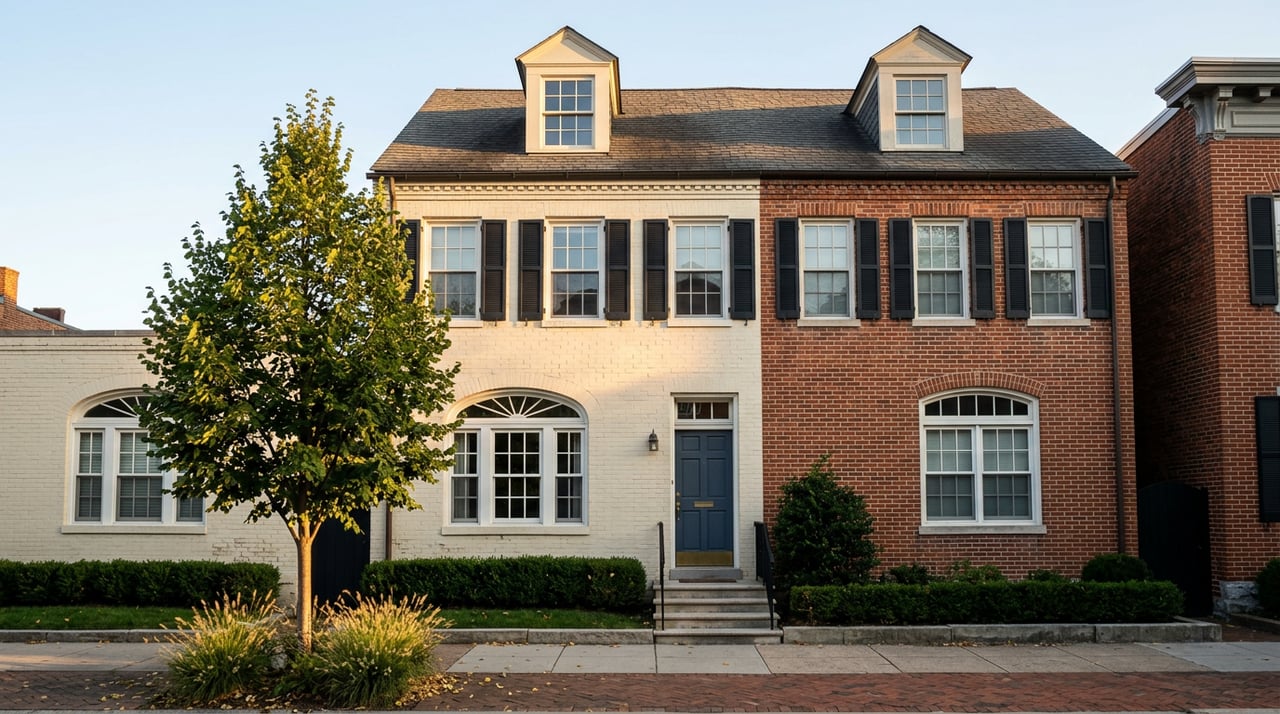
Summit Avenue, anchored by the Cathedral of Saint Paul (built 1906 to 1915), holds the longest continuous stretch of Victorian-era homes in the country, roughly four and a half miles of it. Most of Summit Hill, known locally as Crocus Hill, went up during the building boom of the 1880s through the 1920s. Cathedral Hill's brownstones and rowhouses come from that same era, and Twin Cities electricians point to Cathedral Hill specifically as a place where original knob-and-tube is still common. Macalester-Groveland's Craftsman bungalows come from the same early twentieth-century building wave. Como Park looks different: its rambler-heavy blocks mostly date to the postwar decades, where the wiring concern shifts from knob-and-tube toward aluminum branch circuits, a related but distinct issue insurers evaluate on its own terms.
Here's the part that catches people off guard: the very features that make these listings desirable, the untouched trim, the original floor plan, the plaster nobody has opened in decades, are frequently paired with an electrical system nobody has opened either. A full rewire is invasive enough that owners who prize a home's original character often postpone it for as long as the house will let them.
Twin Cities electricians describe a fairly consistent price range once the work does happen:
| Scope | Typical Range (2026) | What Moves the Price |
|---|---|---|
| 200-amp panel upgrade only | $1,800 to $3,500 | Usually a one-day job if the panel stays in place |
| Full rewire, 2,500 to 4,000 sq ft home | $12,000 to $25,000 | Attic and basement access, number of circuits, plaster versus drywall |
| Full rewire, harder-access or larger homes | Up to $36,000 | Common in homes without open attic or basement access |
A home with an open, walkable attic and basement lands near the low end. A home with finished plaster ceilings and no easy access, common on Summit Avenue and in Cathedral Hill's older rowhouses, lands closer to the top.
Minnesota follows the 2023 edition of the National Electrical Code statewide, and Article 394.12 of that code prohibits knob-and-tube wiring in any wall, ceiling, or attic cavity that's surrounded by loose-fill, rolled, or foamed insulation. The wiring was designed to shed heat into open air, not sit buried under material that traps it.
That rule creates a specific trap for owners of older Saint Paul homes. A homeowner who blew insulation into the attic ten or fifteen years ago to cut heating bills, a sensible move in almost every other context, may have unknowingly created the exact hazard condition that shows up later on an inspection or a claim. When a standard carrier declines coverage, the Minnesota FAIR Plan can sometimes provide temporary placement, but it typically requires the wiring to already be in active repair with a permit filed, not simply scheduled for someday.
Even a homeowner who does secure standard coverage isn't fully in the clear. LegalClarity explains that the standard HO-3 policy form used by most carriers excludes losses caused by faulty, inadequate, or defective workmanship, repair, construction, and maintenance, and separately excludes losses from wear and tear or deterioration. Knob-and-tube wiring, by definition, runs somewhere between 80 and 140 years old at this point, depending on when it was installed. If an adjuster attributes a failure to age-related breakdown rather than a sudden event like a lightning strike, that claim can fall outside what the policy actually pays for. A valid policy and a covered loss are not automatically the same thing.
None of this means these neighborhoods are a bad bet. It means the order of operations matters more here than in newer housing stock.
If you're selling in one of these neighborhoods:
If you're buying in one of these neighborhoods:
Does every pre-1950 Saint Paul home still have knob-and-tube wiring? No. Many have been partially or fully rewired, especially in homes that already went through a kitchen or bath remodel. The home's age tells you it's possible, not that it's certain. Only an electrician's inspection answers it for a specific address.
Is aluminum wiring the same issue? Related, but not identical. Aluminum branch wiring shows up more often in homes built through the mid-1960s and 1970s, including some Como Park ramblers, and insurers evaluate it under its own set of restrictions rather than folding it into knob-and-tube review.
Does a panel upgrade solve the insurance problem on its own? Not by itself. A new panel addresses capacity. If the branch wiring running through the walls is still knob-and-tube, most carriers still consider that the underlying issue regardless of what's happening at the panel.
If you're weighing a listing in Cathedral Hill or comparing offers on a Craftsman in Macalester-Groveland, the electrician's report and the insurance quote deserve to happen early in the process, not in the final week. Michael Favre and the team can help you sequence that timeline correctly from the first showing through closing day. Let's Find Home.
This article is general information, not legal, tax or financial advice. Consult a qualified professional about your situation.
Stay up to date on the latest real estate trends.
Experience a real estate partnership built on trust, expertise, and genuine care. We bring a lifelong understanding of what “home” truly means to every client and every decision.